Casper, Wyoming: The Honest Relocation Guide for 2026
Casper, Wyoming is the most affordable mid-sized city in the entire Rocky Mountain region — and most people from California and Colorado have no idea it exists. The city sits at the geographic heart of Wyoming, population just under 60,000, with home prices well below $300,000, no state income tax, and direct access to mountains, rivers, and public land that most people only see in magazines. If you have been researching a move out of a high-cost state and keep landing on Montana or Colorado, you have been looking at the wrong map.
What Is Casper, Wyoming Like to Live In?
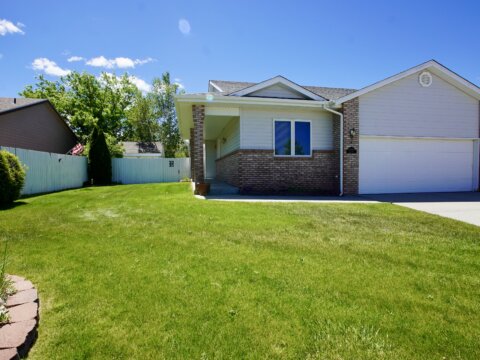
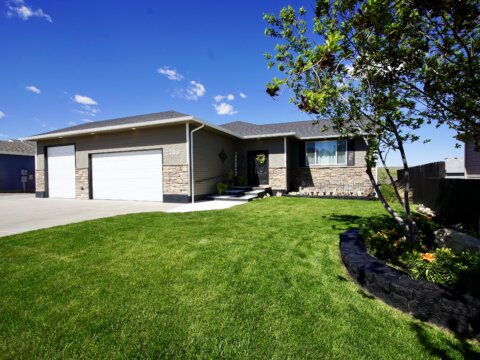
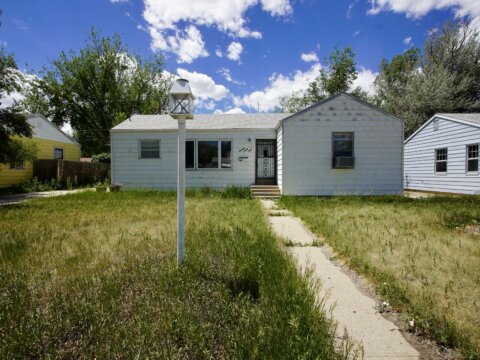
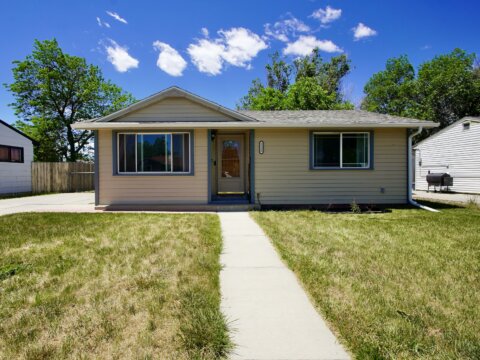
Casper is the second-largest city in Wyoming and the county seat of Natrona County, with a population of approximately 59,000 residents. It sits on the North Platte River in east-central Wyoming at an elevation of about 5,100 feet, surrounded by rolling high desert and backed by Casper Mountain to the south. The cost of living index sits at 93.8 — roughly 6% below the national average — with housing costs indexed at 74.2, meaning homes are significantly more affordable here than in most U.S. cities. The median home price in Casper is approximately $290,000–$300,000 as of 2024–2025, and Wyoming has zero state income tax. Casper has the lowest cost of living of any metropolitan area tracked in the entire Rocky Mountain region, according to the Council for Community and Economic Research.
Why You Should Hear This From Me
Alisha Collins is the lead agent at The Alisha Collins Real Estate Team at eXp Realty, Wyoming’s #1 ranked team, personally selling 120–140 homes per year with over 20 years of experience in the Wyoming market.
I moved to Wyoming when I was five years old. I grew up in Lander, went to the University of Wyoming, and have spent over 45 years in this state. Casper has been my primary market for more than two decades. I am not an outsider with opinions — I am the person my peers across the country call when they want to understand what Wyoming real estate actually looks like. When I tell you what Casper is like, it is because I have sold hundreds of homes here, watched the market through oil booms and downturns, and watched thousands of families land here and build a life they never thought they could afford.
In the last year alone, I personally sold over 120 homes in Wyoming. My team closed 225–296 transactions across Casper, Cheyenne, Douglas, Glenrock, Laramie, and Wheatland. The numbers matter because they mean I see the full picture — what buyers ask, what surprises them, what makes them fall in love with Casper, and what sends some people back to where they came from.
Casper by the Numbers: What the Data Actually Says
Population & Geography
Casper has a population of approximately 59,000 (2020 Census: 59,038), making it Wyoming’s second-largest city. Only Cheyenne, the state capital, is larger. The greater Natrona County area — which includes communities like Mills, Evansville, Bar Nunn, and Rolling Hills — adds roughly another 20,000 residents to the regional footprint. The city sits at 5,100 feet elevation, roughly 2.5 hours from Cheyenne and 4 hours from Denver.
Housing & Cost of Living
Here is what the current data shows:
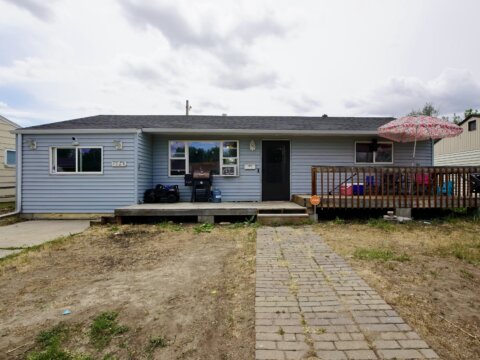
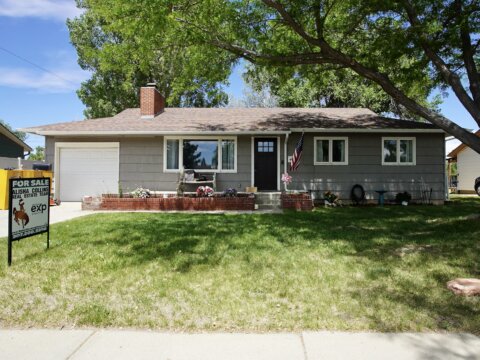
- Median home price in Casper: approximately $290,000–$300,000 (2024–2025)
- Cost of living index: 93.8 (6.2% below the national average)
- Housing cost index: 74.2 (significantly below the U.S. average of 100)
- Median household income: approximately $69,100
- Rent as a percentage of median income: 16.4% — well under the 30% cost-burden threshold
- Average monthly utilities: approximately $598 (below national average)
- No Wyoming state income tax — zero
For context: Casper is 81% less expensive than San Francisco, 37% less expensive than Washington D.C., 46% less expensive than Boston, and 12% less expensive than Miami. That is not a marketing line — that is the math.
Casper vs. Cheyenne vs. Other Wyoming Cities
Casper consistently comes in as the most affordable major metro in the Rocky Mountain region. Cheyenne, the state capital, has a cost of living index of 100.3 and a median home price around $350,000. Douglas and Glenrock — smaller communities about 50 minutes east of Casper — offer even lower price points in the $200,000–$250,000 range, with the trade-off being fewer services and a smaller job market. [INTERNAL LINK: Casper vs Cheyenne Wyoming — Which City Is Right for You?]
Laramie runs slightly higher on housing due to the University of Wyoming’s influence, and Jackson is in a completely different universe — median home values exceeding $1.2 million and a cost of living index of 180.9. Jackson is spectacular, but it is not a place most relocation buyers are targeting unless they are bringing significant cash.
Jobs & Economy
Casper’s economy is anchored in energy, healthcare, retail, and government services. Top employers include Wyoming Medical Center, the energy sector (oil, gas, and minerals), education, and skilled trades. As of mid-2025, Wyoming’s statewide unemployment rate sits at 3.3% — below the national average of 4.1%. The state had roughly two job openings for every unemployed person in 2024, according to Wyoming Department of Workforce Services data.
The average hourly wage in the Casper metro area was $28.00 in May 2024 (BLS data). Higher-paying occupational groups include management ($52.73/hr), architecture and engineering ($48.66/hr), and healthcare ($45.98/hr). For remote workers and dual-income households, the combination of Casper’s cost structure and Wyoming’s zero income tax can create a meaningful shift in monthly take-home relative to what they were keeping in California or Colorado.
Real Talk: What Casper Is Not
I will not sugarcoat this, because sugarcoating is exactly what gets people in trouble. Here is what Casper is not, and you need to know this before you make a decision.
The winters are real. Casper averages around 76 inches of snow annually. Wyoming ranks among the top five coldest states in the country, with an average annual temperature of 42.3°F driven by high elevation and interior geography. Wind is a legitimate daily variable, not an occasional inconvenience. I have lived through it for 45 years. If you cannot handle layering up and clearing a driveway from October through April, be honest with yourself before you move.
The amenities gap is real. Casper does not have a major professional sports team, a large concert venue, an international airport, or the restaurant density of a coastal city. If you need that energy to feel alive, Casper will frustrate you. The flip side is no traffic, no long lines, no parking lots that require a strategy.
Distances are significant. Denver is 4 hours south. The nearest large shopping region is Cheyenne, 2.5 hours away. If you are used to having everything within 20 minutes, the first few months will be an adjustment.
What I have seen work: I had a couple from the Bay Area move to Casper a couple of years ago — both remote workers, two kids, exhausted by traffic and housing costs. They bought a 4-bedroom home with a mountain view for under $350,000. They told me six months in that they felt like they had gotten their life back. They are still here. That story repeats itself regularly. But I have also seen people move here and leave after one hard winter because the isolation hit differently than the YouTube videos suggested. Know yourself before you move.
How to Move to Casper, Wyoming: Practical Steps
1. Start with honest self-assessment. Before you browse listings, ask yourself if you are genuinely built for a high-elevation, four-season climate with wide open spaces and fewer urban amenities. The buyers who thrive here came in with clear eyes.
2. Research neighborhoods by lifestyle. Casper proper has distinct areas: downtown and the north side for walkability, the east side and Bar Nunn for newer construction and more space, Mills and Evansville for a more rural feel at lower price points. Do not let a Zillow map be your guide — it will miss all the nuance.
3. Get the full financial picture before you calculate. Run your actual numbers: no state income tax, lower property taxes, lower utilities, lower housing costs. The monthly swing from a California or Colorado budget can be $1,500–$3,000+ depending on your income bracket. [INTERNAL LINK: Cost of Living in Wyoming — What Buyers Need to Know]
4. Use a local agent who specializes in relocation. Buying in a state you have never lived in is a different process than buying locally. You need someone who can explain neighborhood dynamics, school districts, wind exposure by location, flood plain considerations, and what the market looks like right now — not what Zillow’s estimate says.
5. Search current inventory at MakeWyomingHome.com. This pulls directly from the local MLS and updates in real time. National sites like Zillow and Realtor.com consistently show outdated or already-sold listings in Wyoming. If a home is available, you will see it. If it is gone, it is removed.
6. Visit before you commit if at all possible. I work with many buyers who purchase sight unseen after extensive video tours and calls — and it can work. But if there is any way to spend 3–4 days in Casper before signing a contract, do it. [INTERNAL LINK: How to Buy a House in Wyoming from Out of State]
People Also Ask: Casper, Wyoming
The following questions are addressed throughout this page and formalized in the FAQ section below.
- Is Casper Wyoming a good place to live?
- What is the cost of living in Casper Wyoming?
- Is Casper Wyoming affordable?
- What are the best neighborhoods in Casper Wyoming?
- What is the job market like in Casper Wyoming?
Frequently Asked Questions: Living in Casper, Wyoming
Q: Is Casper, Wyoming a good place to live?
A: Casper is a strong choice for buyers seeking affordability, outdoor access, and a slower pace of life without sacrificing a real city infrastructure. It has hospitals, a regional airport, a growing restaurant scene, and direct access to mountains, rivers, and public land. It is not a fit for everyone — the winters are serious, the amenities are fewer than a coastal city, and the distances between towns require an adjustment. But for the right person or family, it consistently delivers a quality of life that is difficult to replicate at this price point anywhere in the Mountain West.
Q: What is the cost of living in Casper, Wyoming?
A: Casper’s overall cost of living index is 93.8, approximately 6.2% below the national average. Housing is the standout factor, with a housing index of 74.2 — significantly below the U.S. average. The median home price is approximately $290,000–$300,000. Wyoming has no state income tax, and utilities run below the national average. Of all metropolitan areas tracked in the Rocky Mountain states, Casper consistently ranks as the most affordable, according to the Council for Community and Economic Research.
Q: What are the best neighborhoods in Casper, Wyoming?
A: It depends on your priorities. For newer construction with more space, look at the east side of Casper, Bar Nunn, and Evansville. For more established neighborhoods with proximity to downtown and Casper Mountain access, the west and north sides of the city offer solid options in a range of price points. Mills is an independent community adjacent to Casper with lower price points and a more rural feel. The right neighborhood depends on your lifestyle, school district preferences, and commute. A local agent who knows each pocket of the market will save you significant time.
Q: How are the winters in Casper, Wyoming?
A: Casper averages roughly 76 inches of snow per year and ranks among the top five coldest states nationally by average annual temperature. Wind is a consistent variable — 50+ mph gusts are not unusual in winter months. That said, Wyoming’s dry air makes cold feel different than humid cold does, and the sunny days outnumber the grey ones even in winter. If you invest in a well-insulated home with a reliable heating system and approach winter as a season to engage with rather than endure, most transplants adjust within their first full year.
Q: What is the job market like in Casper, Wyoming?
A: Casper’s job market is anchored in energy, healthcare, education, and skilled trades. Wyoming’s statewide unemployment rate was 3.3% as of mid-2025, below the national average. The average hourly wage in the Casper metro area was $28.00 in May 2024 (BLS data), with healthcare and management roles paying significantly higher. For remote workers, Casper’s cost structure paired with Wyoming’s zero income tax creates a meaningful financial advantage relative to working the same remote role while living in California or Colorado.
Q: How does Casper compare to Cheyenne, Wyoming?
A: Casper and Cheyenne are Wyoming’s two largest cities, and they attract different types of buyers. Cheyenne is the state capital, closer to Denver (90 minutes), with slightly higher home prices (median around $350,000) and more government-sector employment. Casper is more centrally located in the state, has a lower cost of living, and gives buyers closer proximity to the mountains and outdoor recreation. For a full breakdown, see [INTERNAL LINK: Casper vs Cheyenne Wyoming].
📹 Video Resources
People Think They Know Casper, Wyoming… They Don’t.
Casper vs Cheyenne Wyoming — Which City Is Right for You?
Ready to Find Out If Casper Is the Right Move?
Start your search at MakeWyomingHome.com — it pulls directly from our local MLS and updates in real time, so you will never waste time on a listing that is already under contract. Download the free Wyoming Relocation Guide from the site to get the full picture on neighborhoods, weather, costs, and what most buyers wish they had known before they moved. If you want to talk through whether Casper fits your situation specifically, my team and I are here — reach out directly and we will give you a straight answer, not a sales pitch.
The Alisha Collins Real Estate Team at eXp Realty | makewyominghome.com | Casper, Wyoming | Wyoming’s #1 Ranked Team
Data sources: Council for Community and Economic Research, U.S. Bureau of Labor Statistics (May 2024), Redfin/Rent.com (Nov 2024), BEA Regional Price Parities (2024), Wyoming Department of Workforce Services (2025). Last reviewed: April 2026.
How Can We Help You?
We would love to hear from you! Please fill out this form and we will get in touch with you shortly.